Stanley & Co Lawyers Website Redesign
Award-winning Adelaide law firm specialising in fixed-fee matters had invested in a full rebrand and a new office. Needed a website that matched that standard. I was brought in as technical lead, ended up running design and development.
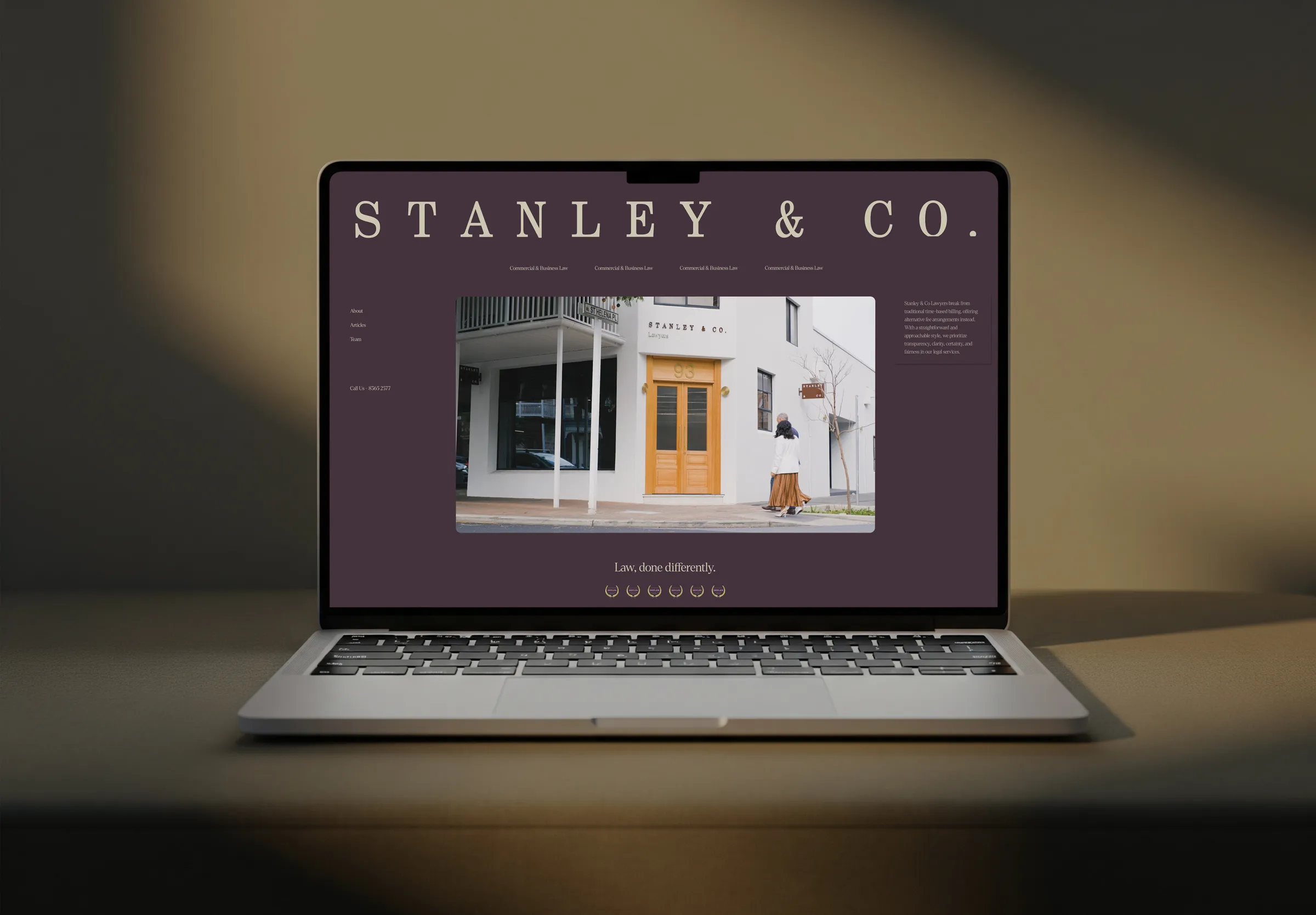
Stanley & Co Lawyers Website Redesign
At a Glance
- Client: Stanley & Co Lawyers
- Project: Full website redesign and rebuild on Webflow
- Timeline: Feb 2024 to Oct 2025
- Scope: Web design (Figma prototype, component architecture), Webflow development, CMS architecture, SEO migration, client training
- Budget: $15,000 total project value
- Key result: 40-collection CMS supporting 300 pages; SEO equity preserved across platform migration; full site ownership transferred to client from day one
Problem
Stanley & Co Lawyers is an award-winning Adelaide firm specialising in fixed-fee legal matters. They had made a significant investment: a full rebrand and a newly renovated office. They needed a website that matched that level. Their previous platform, WordPress, had limited their ability to add new pages, which had put a ceiling on their SEO growth. A web development agency had quoted the rebuild but couldn’t deliver the design quality the rebrand demanded. A branding agency could match the quality but was over budget.
I was brought in as the technical lead by a design collaborator who had an existing relationship with the firm. I took over the full design scope mid-project and led everything from that point forward: every client meeting, every deliverable, design through development, SEO migration, handover, and launch.
The first real decision was the platform. The client assumed WordPress was the standard and pushed for it. I recommended Webflow: better design control, a CMS that non-developers can genuinely operate, and a build environment suited to the complexity of the site they needed. The client had no prior exposure to Webflow. I made the case, got sign-off, and built in Webflow.
The SEO risk was significant. The site had meaningful search equity built over years, and a migration done without precision costs rankings that take months to recover. The firm’s SEO agency was engaged to provide technical requirements. I took ownership of the migration documentation, produced the full redirect map and meta configuration, and submitted it to both the client and agency for review before the build began.
Scope and constraints:
- Budget: $15,000 total project value across design and development
- Target launch date tied to the firm’s physical office opening
- Existing site with meaningful SEO equity to protect across the migration
- External SEO agency with technical requirements to integrate from the architecture stage
- Multiple stakeholders (Partners, Creative Manager) with distinct priorities; scope evolved significantly mid-project
- Design and development responsibilities consolidated under Cameron mid-project
Approach
1. Held firm on Webflow over WordPress
The client wanted WordPress. I recommended Webflow because it was the right tool for the brief: full design control, a CMS that the team could genuinely manage without a developer, and a build environment that could handle the technical complexity of the site. Holding this position meant making the case directly to a client who had never heard of Webflow and had defaulted to the familiar name. The tradeoff was a longer onboarding conversation at the start. The return was a platform that could actually deliver the independence the brief required.
2. Took on the full design scope mid-project
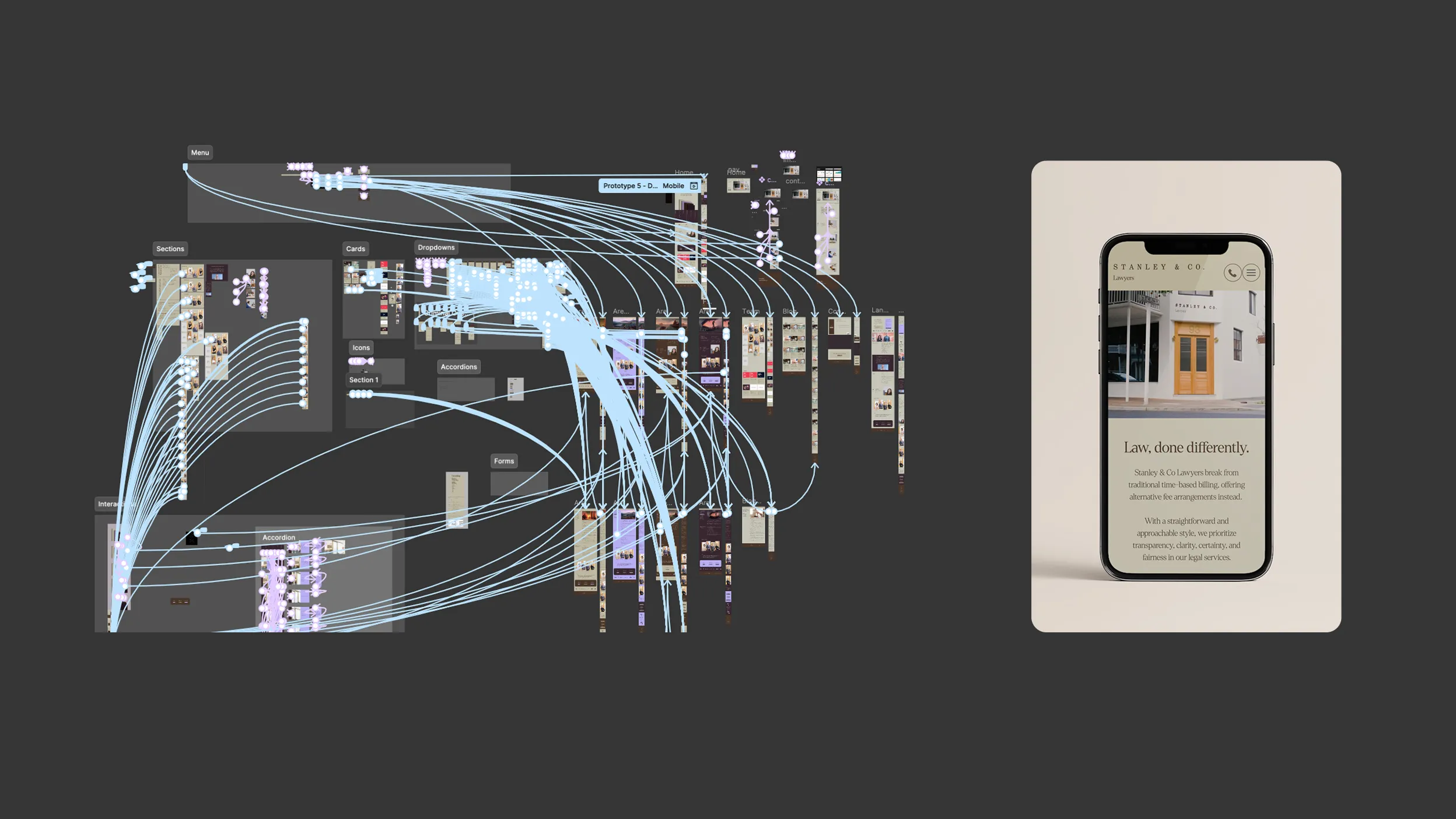
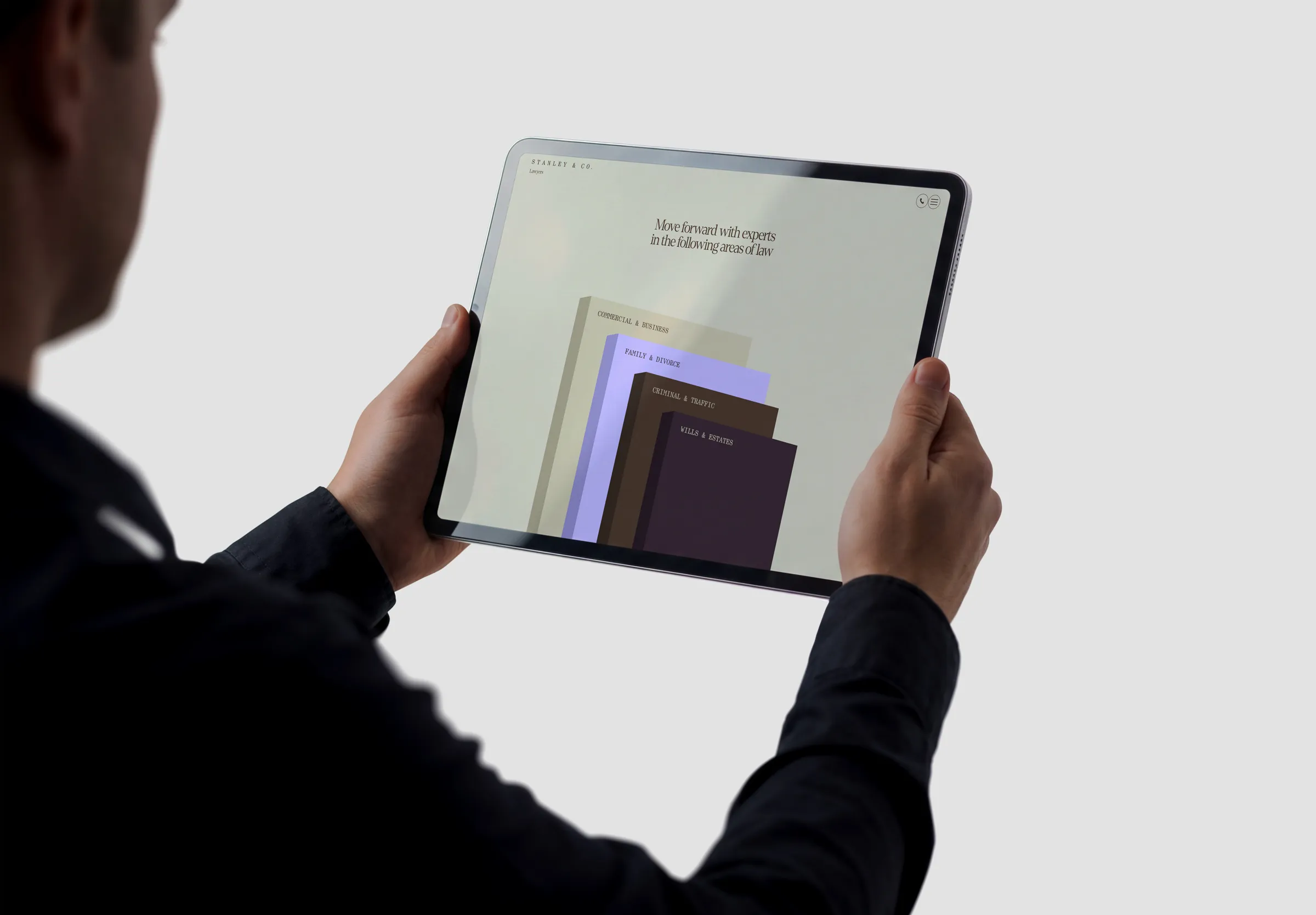
When the design phase required a different approach, I took over the full design scope rather than let the project stall. I built a complete Figma prototype: working dropdown navigation, hover states, vertical accordion sections, page flows, CMS individual page layouts, and four brand themes corresponding to the firm’s four practice area groups. The prototype followed atomic design principles, with every component defined at atom, molecule, and organism level before any Webflow development began.
The client rejected several design directions before we reached alignment. I used those rounds of iteration to get precise visual approval before touching the build. That extended the design phase, but it meant no mid-build redesigns. A site this complex does not survive scope changes in development.
One specific design challenge: the client had a 3D-rendered hero image from their brand agency that they loved and wanted on the site. It was far too large to use as-is. I recreated it as an interactive SVG, preserving the visual intent without the performance cost.
3. Documented the project before development began
Before any Webflow development, I produced two documents: a Website Build Plan and Expectations (WBE) and a Master Page Directory (MPD). The WBE defined scope explicitly and established a written baseline for anything that fell outside it. The MPD indexed every page, mapped old URLs to new ones, and identified all required 301 redirects.
A project of this scale required a documented foundation before development began. When mid-project requests came in that exceeded the original scope (homepage accordions, “Our Process” graphics, mobile-specific animations), I handled them through pre-approved hour blocks at $150 per hour. Making the scope boundary explicit kept the relationship and the budget clean, and gave the client a genuine filter: if they had to pay for it, did they actually want it?
4. Took ownership of the SEO migration
I produced the full redirect documentation, including meta configuration requirements, and submitted it for review before the build began. Neither the client nor the SEO agency gave substantive feedback before I started. I treated that as sign-off, noted in writing that identifying which existing pages were current, merged, or retired was the client’s responsibility, and proceeded. Half of the existing pages were missing basic meta titles and descriptions. I flagged it. The migration preserved what was there to preserve.
Post-launch technical audits confirmed traffic, referral domains, and keyword positions held across the platform change.
5. Built for scale and independent operation
The CMS was defined as 40 collections, including 32 specific to practice areas, before any front-end development began.
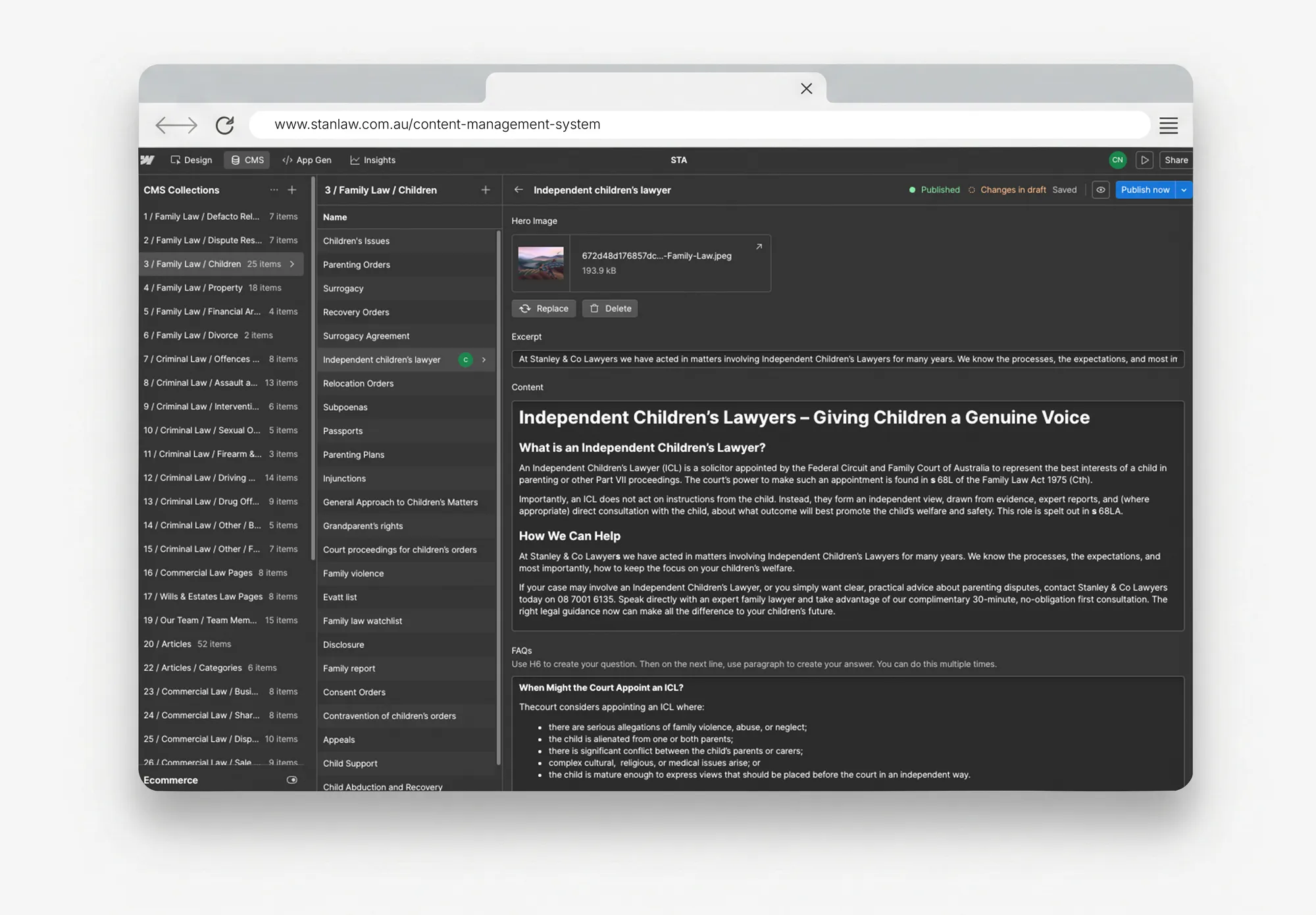
I built a landing page template system using Webflow’s template page feature, which meant the team could generate new SEO-targeted campaign pages without a developer.
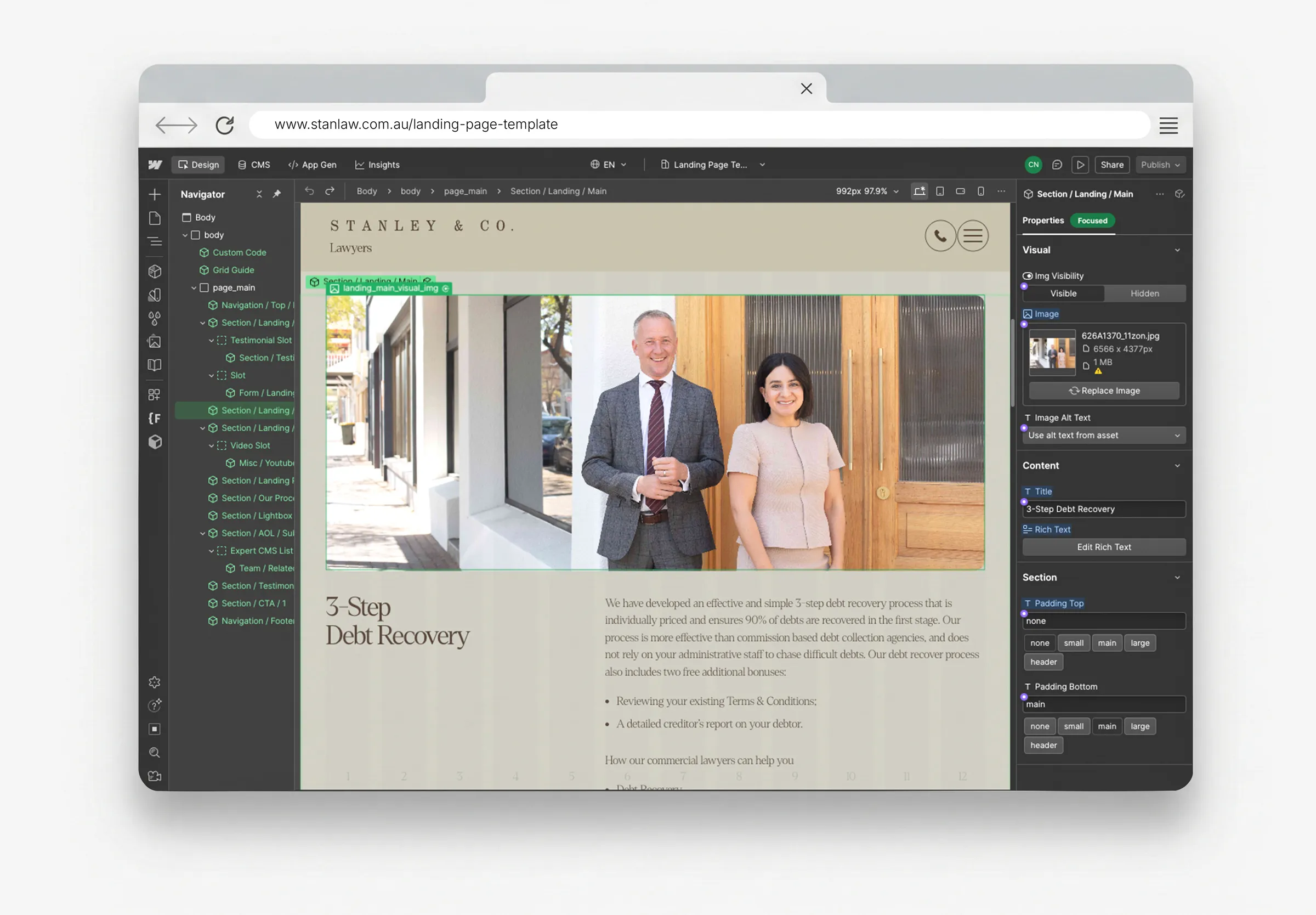
The technical build included: GSAP scroll animations; a custom rolling counter for years of experience; a per-practice-area Google Review swiper; a video hero for the new office (produced by TopBunk, who I recommended, and hosted externally via CDN to work around Webflow’s video compression); fully custom navigation; and inline SVG icons across all dropdowns for cross-browser consistency.
6. Rebuilt the affected sections before launch
The site was development-complete in early 2025. The client held on launch for nine months due to internal business timing. During that period, both the CSS framework I had used and Webflow itself shipped major updates. I rebuilt the affected sections to bring the site current before it went live. The site needed to go live on current technology, not on deprecated patterns.
Outcome
The site launched in October 2025.
Client independence achieved. The site was transferred to Stanley & Co.’s own Webflow account, giving the team full ownership of hosting, billing, and content. The 40-collection CMS and landing page template system meant the team could manage day-to-day edits and generate new SEO pages without external support from day one.
SEO preserved across the migration. Post-launch technical audits confirmed traffic, referral domains, and keyword positions held. The redirect mapping did its job.
Full-stack delivery. What was contracted as a technical build became a full-stack engagement: component architecture and Figma prototyping, four brand-themed design system, SVG illustration, GSAP animations, custom CMS, video infrastructure, SEO migration, and client training.
The rebuild held. After a nine-month gap between build completion and launch, the site went live on current technology. No technical debt handed to whoever picks it up next.
“Thanks for your help in getting the site live! It looks great.”
Elena Muscat, Project Liaison
Why They Needed Me
- This project breaks without the platform decision. The client wanted WordPress. WordPress could not deliver the design control, CMS flexibility, or client independence the brief required. Recommending Webflow and holding that position against client preference was the first real consulting move on this project.
- This project breaks without design capability at the technical lead level. I built the full design scope: component architecture, brand system application, four practice area themes, and a complete Figma prototype the client could review before a line of code was written. A developer without design capability would have left the client without a design.
- This project breaks without documentation as a scope tool. I built the WBE and MPD before development began, which is the only reason out-of-scope requests stayed billable rather than absorbed.
- This project breaks without taking ownership of the SEO migration. The SEO agency did not lead the technical requirements. If I had waited for them to drive it, the redirect mapping would not have been production-ready. The post-launch audit confirming positions held is the outcome of treating migration documentation as my responsibility, not a shared one.
- This project breaks without the rebuild decision. Handing over a site on deprecated framework patterns would have made every future edit harder and more expensive. Rebuilding the affected sections during the client delay was not in scope. It was still the right call.
It starts with a morning.
Every project on this page began with someone deciding what to do. Three hours, $600, you leave with the decision made and a date on it. Then I build it.
Decide it in a morning · $600 →- Custom Website $5500 Designed and built for your business specifically.
- Website — Custom One-Pager $2200 One page, designed and built for your business. Live in a week.